From Spare Parts to Security Research: A Practitioner's Guide to Building a Functional Lab Environment
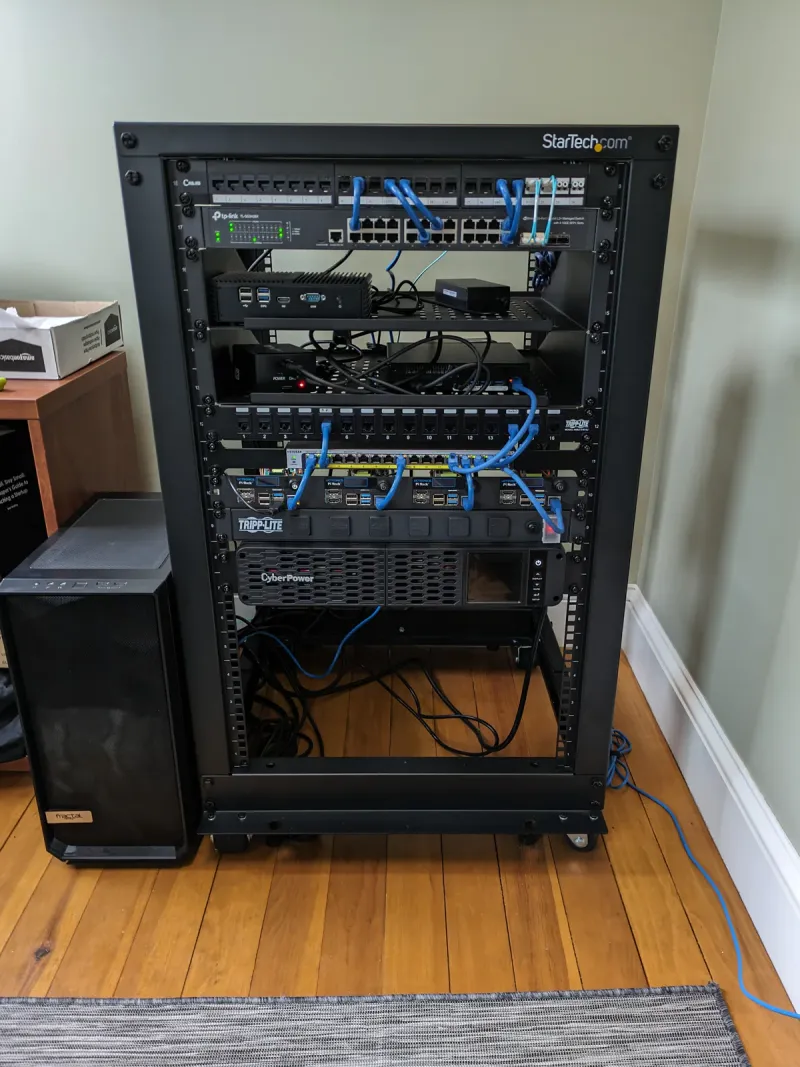
Photo: cybersecurity home lab server rack computers technical workspace, via mtlynch.io
There is a persistent gap between theoretical security knowledge and the practical competency required to detect, analyze, and respond to real-world threats. Certifications and coursework provide frameworks, but genuine skill is developed through repetition in realistic environments. For that reason, building a personal or organizational security research lab is not merely a hobbyist pursuit—it is a professional development strategy with measurable returns.
This guide is designed for security practitioners at the beginner-to-intermediate level who are ready to move beyond simulated environments and establish infrastructure they control entirely. The recommendations here reflect community-tested approaches and align with responsible research practices endorsed across the U.S. security community.
Defining Your Lab's Purpose Before Spending a Dollar
Before acquiring any hardware or downloading any software, invest time in scoping your intended use cases. A lab optimized for malware analysis has different requirements than one built for web application penetration testing, network protocol research, or Active Directory attack simulation. Attempting to serve all purposes simultaneously without adequate resources often results in a fragmented, underperforming environment.
Common research categories and their primary requirements include:
- Malware analysis: Isolated network segments, snapshot-capable virtualization, behavioral analysis tools, and controlled internet access
- Web application testing: Local deployment of intentionally vulnerable applications, proxy tooling, and browser environments
- Network security research: Managed switches, multiple virtual LANs (VLANs), traffic capture infrastructure
- Active Directory and Windows environment simulation: Sufficient RAM for multiple concurrent Windows VMs, domain controller configuration
Defining two or three primary use cases will guide every subsequent decision in this guide.
Hardware Recommendations: What You Actually Need
A functional research lab does not require enterprise-grade equipment purchased at retail prices. The U.S. secondary market for server and workstation hardware—available through platforms like eBay, ServerMonkey, and local government surplus auctions—offers substantial capability at a fraction of original cost.
Minimum viable configuration for a single-host lab:
- CPU: 8-core processor with hardware virtualization support (Intel VT-x or AMD-V). Intel Xeon E5 or AMD Ryzen 7 series workstation chips offer strong price-to-performance ratios on the used market.
- RAM: 64 GB minimum. Research environments involving multiple concurrent virtual machines are RAM-constrained long before they become CPU-constrained. 128 GB is a more practical target if budget permits.
- Storage: A 1–2 TB NVMe SSD for the host operating system and active virtual machine images, supplemented by a 4–8 TB HDD array for snapshot and archive storage.
- Network interface: A multi-port NIC (Intel I350-T4 or equivalent) enables physical network segmentation between lab traffic and production or home networks.
For organizations building a shared team lab, a rack-mounted server platform such as a Dell PowerEdge R730 or HPE ProLiant DL380 Gen9 provides centralized resources accessible via remote management interfaces, which is particularly useful for distributed teams.
Virtualization: The Core Architecture Decision
Virtualization is the operational backbone of any research lab. It enables rapid deployment of target environments, isolated execution of potentially malicious samples, and snapshot-based recovery when experiments produce unstable system states.
Hypervisor options worth evaluating:
- Proxmox VE (open-source, Linux-based): The most commonly recommended choice within the research community for home and small organizational labs. Proxmox provides a web-based management interface, supports both KVM (full virtualization) and LXC (container-based) workloads, and integrates with enterprise storage options like ZFS. It is free to use without a subscription, though paid support tiers exist.
- VMware ESXi (free tier): Widely deployed in enterprise environments, making familiarity with it professionally valuable. The free version lacks certain advanced features but is fully adequate for most research purposes.
- Type 2 hypervisors (VMware Workstation Pro, VirtualBox): Appropriate for practitioners beginning with a single desktop or laptop. VirtualBox is fully open-source and cross-platform; VMware Workstation Pro transitioned to a free personal-use license model in 2024.
Regardless of platform, configure your virtualization environment to support network isolation. Create at least three distinct virtual networks: one with controlled external internet access (for malware detonation with egress filtering), one fully isolated (air-gapped for sensitive analysis), and one bridged to your physical network for tool updates and management access.
Essential Open-Source Tools for Your Initial Toolkit
The open-source security tooling ecosystem is mature, actively maintained, and free. The following represent foundational components for a well-rounded research environment:
Operating system base images:
- Kali Linux: Debian-based, pre-loaded with offensive security tools. Suitable for penetration testing workflows.
- REMnux: A Linux distribution purpose-built for malware analysis, including tools for static and dynamic analysis, network traffic examination, and document forensics.
- FLARE VM: A Windows-based malware analysis distribution maintained by Mandiant, installable on a Windows 10/11 VM base.
Network analysis:
- Wireshark: Protocol analyzer for capturing and inspecting network traffic at the packet level.
- Zeek (formerly Bro): Network security monitor that generates structured logs from traffic captures, well-suited for detection research.
- INetSim: Simulates common internet services (DNS, HTTP, SMTP) within an isolated environment, allowing malware to execute as if internet-connected without actual external communication.
Malware analysis:
- Cuckoo Sandbox / CAPE Sandbox: Automated dynamic analysis platforms that execute suspicious samples and generate behavioral reports.
- YARA: Rule-based malware classification and detection tool widely used across the research community.
- Ghidra: NSA-developed reverse engineering framework, open-sourced in 2019. A capable alternative to commercial disassemblers.
Vulnerability research:
- Metasploit Framework (open-source edition): Exploitation framework with an extensive module library.
- Burp Suite Community Edition: Web application proxy for intercepting, analyzing, and modifying HTTP/S traffic.
Legal Considerations: Boundaries Every Researcher Must Respect
This section is not optional reading. Security research conducted without a clear understanding of applicable law exposes practitioners to significant legal risk, regardless of intent.
In the United States, the Computer Fraud and Abuse Act (CFAA) remains the primary federal statute governing unauthorized computer access. The law's broad language has historically created ambiguity around activities that researchers consider legitimate, including security testing on systems they do not own or have not received explicit written authorization to test.
Fundamental rules for responsible lab practice:
- Test only systems you own or have documented written authorization to assess. This applies to cloud environments, third-party services, and any infrastructure outside your physical lab.
- Do not route malicious traffic through your ISP without egress filtering controls. Unintentional command-and-control callbacks or scanning activity originating from your network can trigger ISP abuse reports and, in some cases, law enforcement attention.
- Use intentionally vulnerable applications for web testing practice. Projects such as DVWA (Damn Vulnerable Web Application), OWASP WebGoat, and HackTheBox (a structured legal platform) provide sanctioned targets.
- Document your research methodology. Maintaining records of what you tested, when, and why provides important context if your activities are ever questioned.
For practitioners interested in vulnerability disclosure, familiarize yourself with coordinated disclosure norms and the safe harbor provisions outlined in the U.S. Department of Justice's Framework for a Vulnerability Disclosure Program.
Connecting Your Lab to the Broader Research Community
A lab operated in isolation has limited reach. The U.S. security research community offers numerous avenues for sharing findings, accessing collaborative resources, and contributing to collective defense.
Consider participating in Capture the Flag (CTF) competitions to benchmark skills and engage with peers. Platforms such as CTFtime.org aggregate events year-round. Contributing YARA rules, Snort/Suricata signatures, or Ghidra scripts to public repositories extends the impact of your individual research. Conference venues including DEF CON, Black Hat USA, and regional BSides events provide opportunities to present findings and receive peer review.
Building a research lab is a commitment, not a weekend project. The initial configuration effort pays dividends over years of accelerated learning, and the infrastructure you establish today will evolve alongside your expertise. Start with a defined scope, invest in adequate RAM before any other component, and prioritize isolation from the outset. The rest follows from practice.