Structured Trust in an Untrusted World: Implementing Zero Trust Without Paralyzing Your Organization
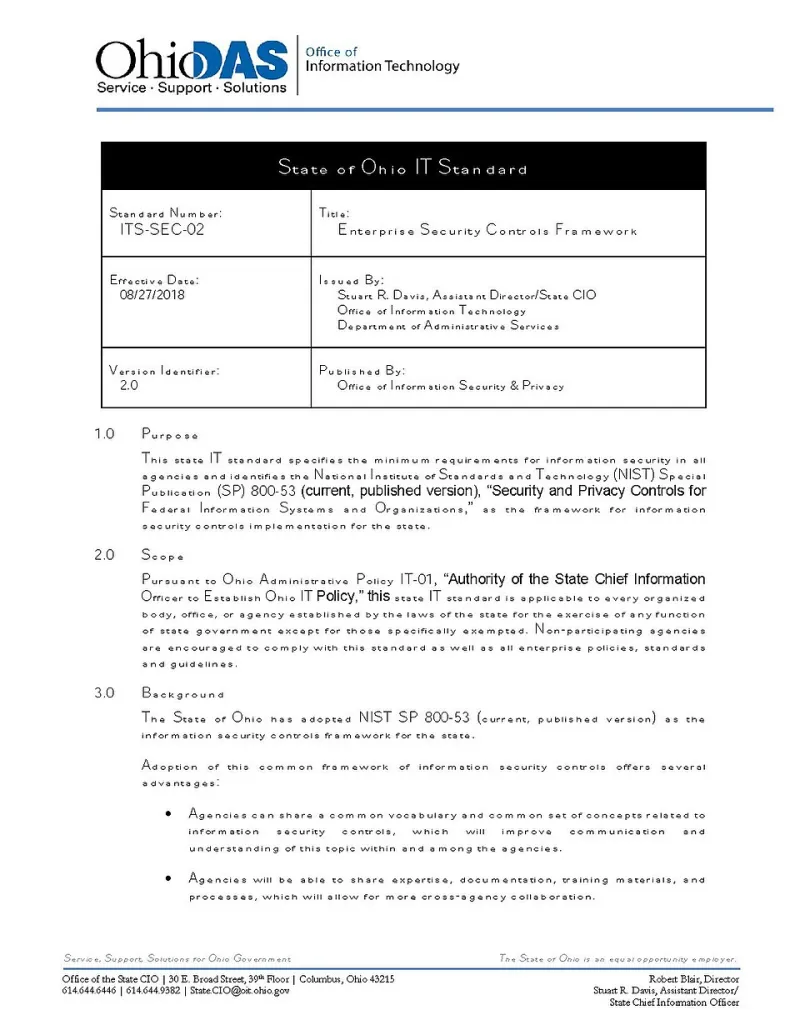
Photo: Ohio. Office of Information Technology, Public domain, via Wikimedia Commons
The phrase "never trust, always verify" has become something of a rallying cry in enterprise security circles. Yet for every organization that has successfully transitioned to a zero trust model, there are others whose implementations stalled under the weight of access request backlogs, frustrated end users, and helpdesk ticket queues that stretched into the hundreds. Zero trust, when applied without discipline, can produce exactly the kind of organizational friction that causes security controls to be circumvented or quietly abandoned.
The challenge is not philosophical. Most security professionals agree with the underlying premise: implicit trust is a liability, and lateral movement within a network is far easier when perimeter defenses are treated as sufficient. The challenge is operational. Translating a sound theoretical model into a functioning enterprise environment requires careful sequencing, stakeholder alignment, and a willingness to treat usability as a first-order security concern rather than an afterthought.
Why Zero Trust Deployments Fail Before They Finish
Many zero trust initiatives collapse not because of technical inadequacy but because of scope mismanagement. Organizations that attempt to enforce granular, continuous verification across every system simultaneously often discover that their identity infrastructure, logging pipelines, and endpoint management tooling were not mature enough to support the load. The result is a fragmented deployment where some systems operate under strict verification policies while others remain effectively open — a hybrid state that provides neither the efficiency of a legacy perimeter model nor the security benefits of genuine zero trust.
A second failure mode involves policy design. Access policies in zero trust environments must be precise. Overly permissive policies undermine the model's core value; overly restrictive ones generate enough friction that employees find workarounds. When a financial services firm in the Mid-Atlantic region attempted a full zero trust rollout across its trading floor operations in 2021, the initial policy set was so granular that latency introduced by continuous re-authentication measurably impacted transaction workflows. The security team was forced to roll back controls and rebuild policy logic from scratch — a costly delay that set the program back by nearly two quarters.
Phased Adoption as a Risk Management Strategy
The organizations that navigate zero trust most successfully tend to treat the transition as a multi-year program rather than a discrete project. Phased adoption allows security teams to validate policy logic, tune identity provider integrations, and build organizational muscle memory before extending controls to the most sensitive or operationally complex environments.
A practical phasing model typically proceeds along three tracks:
Track 1 — Identity and Access Foundations. Before enforcing zero trust policies, organizations must have reliable, centralized identity management in place. This means consolidating identity providers, enforcing multi-factor authentication universally, and establishing a baseline of device health attestation. Without this foundation, zero trust policies cannot be consistently enforced regardless of how well they are designed.
Track 2 — Microsegmentation of High-Value Environments. Rather than attempting to segment the entire network simultaneously, mature programs begin with crown-jewel assets — production databases, source code repositories, financial systems, and privileged administrative interfaces. Restricting lateral access to these environments first yields the highest security return while limiting the operational surface area that must be managed.
Track 3 — Continuous Verification and Behavioral Analytics. The final phase extends verification beyond static access decisions to include runtime behavioral signals. This is where technologies such as user and entity behavior analytics (UEBA) and continuous access evaluation protocols (CAEP) become relevant. At this stage, access decisions are informed not just by identity and device posture at login, but by behavioral signals observed throughout an active session.
The Usability Imperative
Security architects sometimes treat usability concerns as the domain of product teams rather than security engineers. This is a mistake. A zero trust model that employees route around is worse than no model at all, because it creates a false impression of security coverage while leaving actual gaps unaddressed.
Single sign-on integration, transparent device health checks, and risk-adaptive authentication policies — where step-up authentication is only triggered when behavioral signals warrant it — all reduce the visible burden on end users without relaxing the underlying verification logic. When users experience zero trust as seamless access rather than a gauntlet of prompts, adoption resistance diminishes substantially.
A healthcare network operating across multiple states implemented risk-adaptive policies that reserved step-up authentication for access attempts originating outside known device profiles or during atypical hours. Routine access from enrolled devices during standard working hours required no additional user interaction. The security team reported a 60 percent reduction in helpdesk tickets related to authentication issues within six months of the policy change, while maintaining the verification posture required under HIPAA-adjacent internal controls.
Governance and the Long Tail of Zero Trust
Zero trust is not a product purchase. It is an operational model that requires ongoing governance to remain effective. Access policies drift. Device inventories go stale. Identity integrations break during platform upgrades. Organizations that treat zero trust as a one-time deployment rather than a continuous program will find that their posture degrades quietly over time.
Establishing a dedicated access governance function — responsible for periodic policy review, entitlement certification, and integration health monitoring — is essential for sustaining the model. Quarterly access reviews, automated entitlement expiration for temporary permissions, and integration testing pipelines that catch identity provider regressions before they reach production are all operational disciplines that separate mature zero trust programs from those that exist primarily on paper.
Closing Perspective
Assuming breach is a sound security posture. It acknowledges the reality that determined adversaries will find entry points regardless of perimeter defenses, and it shifts the defensive focus toward limiting the damage they can cause once inside. But assuming breach should not translate into assuming chaos in the design of access controls. The most resilient zero trust implementations are those built with as much attention to operational coherence as to security rigor — structured, phased, and designed with the humans who must live within them firmly in mind.