Peer Review in the Age of Plausible Text: A CFP Integrity Checklist
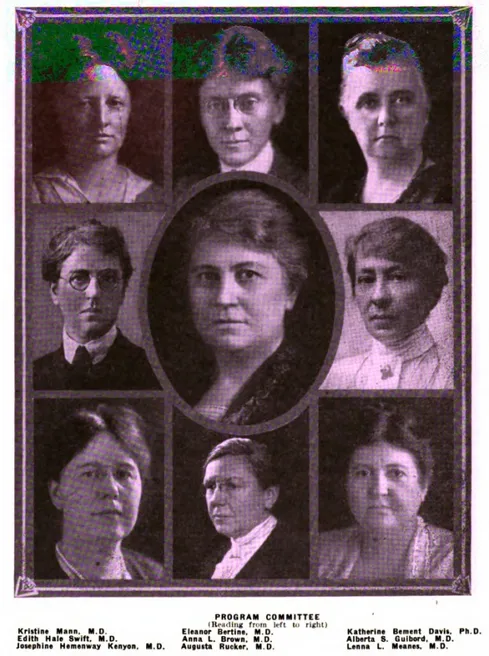
Photo: The Woman's Medical Journal, Public domain, via Wikimedia Commons
Program committees are used to imperfect submissions. They are not used to submissions that are fluent, well-structured, and wrong. In 2026, AI-assisted writing has made the CFP queue look better than the underlying research. Abstracts arrive polished, citations look plausible, and vendor narratives are dressed in the vocabulary of independent inquiry. The review problem is no longer just relevance and novelty. It is verification.
The argument here is direct: the call for papers is part of the security community's integrity surface. If a program accepts work it cannot reproduce or attribute, the stage lends credibility to claims that have not earned it. That is a security issue, not only an editorial one. Reviewers need a checklist that treats the CFP like code review: inspect the claims, test the evidence, and require disclosure.
The New CFP Threat Model
Three failure modes dominate. First, fabricated or misattributed citations: references that look real but do not support the sentence, or that point to sources the author never read. Second, unreproducible results: a clean narrative around data, tooling, or a testbed that cannot be examined. Third, undisclosed commercial interest: a vendor pitch presented as neutral research, with the product name removed from the abstract but not from the conclusion.
AI assistance is not the problem by itself. The problem is plausible text without provenance. A submission can be grammatically flawless and still fail the basic reviewer question: what did you actually do, and how would someone else check it?
Screen for Substance, Not Style
Ask every submission for a short methods appendix, even at the abstract stage. It should state the data source, the collection window, the environment, the tool versions, and the limits of the claim. For offensive or defensive research, require a reproducibility statement: what can be shared, what cannot, and why. For case studies, require a timeline and a description of evidence. If the authors cannot describe their method in plain language, the polish is not a substitute.
Reviewers should also test citations selectively. Pick two or three references that carry the argument and verify that they exist, that they say what the submission claims, and that they are current enough for the assertion. This is not a full peer review of the bibliography. It is a sample that catches the most common failure: citations used as decoration rather than support.
Make Disclosure a Gate, Not a Footnote
Disclosure should cover tool use, funding, employment, and conflicts. Did the authors use an AI writing assistant, a code generator, or a data-labeling service? Did a vendor fund the testbed? Is the speaker employed by a company whose product appears in the evaluation? These questions should be answered before acceptance, not discovered during Q&A.
A simple rule helps: disclose the role, not just the tool. 'AI was used to edit grammar' is a different disclosure from 'AI generated the literature review' or 'AI produced the test cases.' The first is editorial support. The second changes how the committee must verify the work. The program should publish its disclosure policy and apply it consistently, including to invited talks.
Use a Reviewer Script
A three-question triage catches many weak submissions before deep review. What was measured? How was it reproduced? What would falsify the claim? If the answers are vague, the submission is not ready for a technical stage. If the answers are specific, the committee can assign a reviewer with the right background.
For borderline submissions, ask for an artifact review: a sanitized dataset, a test harness, a configuration file, or a detailed lab diagram. Not every talk needs a public repository, especially when disclosure could harm victims or expose a vendor. But every technical talk needs a path to verification for the committee. 'Trust us' is not a methodology.
Protect the Stage After Acceptance
Acceptance is not the end of integrity work. Review the final slides for claims that outrun the paper. Confirm that live demos will run on a segmented network, with a recorded fallback. Require a disclosure slide that names funding, tooling, and affiliations. Brief the session chair to stop a talk that turns into an undisclosed sales pitch.
The CFP is often treated as administration. In 2026, it is a control. A program that verifies provenance, reproducibility, and disclosure protects its audience from polished nonsense and protects the community's credibility from the next plausible-sounding failure.